Mugshots by Kathleen Moore-Walsh
- gcleere
- Sep 29, 2021
- 2 min read
Twenty years ago, David Garland in his critically acclaimed book, The Culture of Control, observed that “We quickly grow used to the way things are. Today more than ever, it is easy to live in the immediacy of the present and to lose all sense of the historical processes out of which our current arrangements emerged.”
The history of photographs for crime prevention is one of the areas that has become so common place we seldom give it a second thought. It is difficult today to believe with nearly every person wielding a phone with a camera that photographs once required an expert knowledge of bulky, fragile equipment and chemical processes. John Tagg in his 1993 book, The Burden of Represenation observed that there is a clear link in the nineteenth century between the emergence of new state institutions and their practices of surveillance and record keeping that impacted on society. The new institutions included the police, prisons, asylums, health departments, schools and the modern factory. Taag argued that photography was complicit in “spreading networks of power” by allowing those in power to objectify others, categorise and study them like specimens. Central to the process was the assumption that photographs told or represented the truth. Taag observed that like the state the camera is never neutral.
Today, police arrest photographs or mugshots are well known by the public. In addition to their use for identification and detection of crime mugshots have become a source of entertainment in some jurisdictions. For example, in 2017 a North Carolina mugshot of an arrestee snacking on a sandwich went viral. Traditionally Alphonse Bertillon, the so-called French grandfather of forensics, is credited with developing anthropometry and a standardized approach to photographing mugshots. In 1890 Berillon published, La Photographie Judiciaire, which contained the first set of rules for a scientifically exact form of identification photography. Subjects should be well lit, photographed full face and also photographed in profile, with the ear visible.

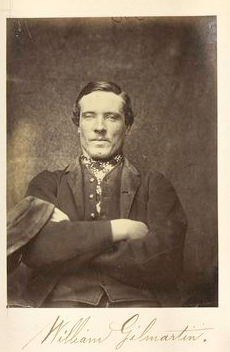
Prior to Berillon’s mugshot method photographs, British authorities began taking “mug shots” of convicts in the late 1850’s. Fiona Fitzsimmons, “Kindred Lines: Prison Photographs,” available at https://www.historyireland.com/volume-24/kindred-lines-prison-photographs/ provides information concerning early mugshots taken of Mountjoy and other prisons. ‘The convicted and untried political prisoners in Mountjoy’, compiled in 1866, is now held in the New York City Public Library digital collections and is available on-line https://digitalcollections.nypl.org/search/index?utf8=%E2%9C%93&keywords=fenians. The contents of the two Irish mugshot albums held by the New York City Public Library were digitalized and made accessible online in 2016.
Comments